
Historic Masonry Specialists
Brick Repair & Restoration for Historic Homes & Buildings in Washington, DC
Signs of aging masonry include cracked and flaking bricks, loose bricks, mortar gaps, white stains, and damp walls. Renaissance Development specializes in repairing and restoring historic brick buildings, ensuring both their appearance and long-term durability. We serve homeowners and commercial clients across Washington, DC, and Old Town Alexandria, focusing on older brick structures where the right materials and methods are essential.


Trusted by Owners of Historic Properties
Not Sure What to Call the Problem? Start With What You See.
Many owners search for “brick repair” because the damage is visible, not because they know the exact masonry term. That is exactly where the conversation should begin.
You may be seeing crumbling mortar, loose bricks, flaking brick faces, old cement patches, or staining on a brick façade. In masonry terms, those conditions may involve repointing, tuckpointing, selective brick replacement, mortar restoration, moisture intrusion, or spalling brick repair. You do not need to diagnose it yourself.
Tell us what you are seeing, and we will evaluate the masonry, explain the likely cause, and recommend the appropriate scope of work for your building.
Common Brick Problems We Fix
Visible brick damage is often more than a cosmetic issue. On older buildings, the condition of the brick, mortar, and surrounding wall area should be evaluated together so the repair addresses the actual problem rather than just the most obvious symptom.
Spalling, flaking, or broken brick faces
When the face of a brick begins to flake, pop off, or crumble, moisture is usually involved. The brick may be absorbing water, holding trapped moisture, or reacting to hard prior repairs that do not work well with historic masonry.
Cracked brick or cracked mortar
Cracks may appear in individual bricks, stair-step patterns, mortar joints, or areas around windows, doors, chimneys, and rooflines. Some cracks are localized; others may suggest movement or moisture-related deterioration that needs a broader evaluation.
Loose, shifting, or missing bricks
Loose bricks often indicate that the surrounding mortar is no longer holding the wall together properly. Selective brick replacement, brick resetting, and mortar restoration may be needed to restore stability and appearance.
Failing, recessed, or missing mortar joints
If the mortar between bricks is crumbling, powdery, recessed, or missing, water can enter the wall. This is often the point where repointing or tuckpointing becomes part of the repair plan.
Bulging, bowed, or uneven wall areas
A wall that looks wavy, pushed out, or uneven should be taken seriously. Renaissance Development can evaluate the visible masonry conditions and recommend an appropriate next step. When a condition appears to require additional structural review, that can be addressed as part of the project planning process.
White powder, dark streaks, or moisture staining
White powder on brick is commonly called efflorescence. Dark streaks, green or black staining, and damp interior walls can also point to moisture movement through masonry. Cleaning alone will not solve the issue if the moisture source remains unaddressed.
Older cement patches or incompatible repairs
Many DC brick buildings have older patch repairs that are too hard, visually mismatched, or no longer bonded properly. These repairs can trap moisture, damage softer brick, and create a patchwork appearance that detracts from the building.
Painted brick with hidden deterioration
Paint can hide failing joints and damaged brick. It can also trap moisture in the wall. Painted brick façades still need proper masonry evaluation when mortar is deteriorating, paint is peeling, or dampness appears indoors.
Chimney brick deterioration
Chimneys are highly exposed to weather. Missing mortar, loose bricks, cracking, and spalling on a chimney often indicate that masonry repair or tuckpointing is needed before deterioration becomes more extensive.
Brick Repair vs. Brick Restoration
Brick repair usually begins with a visible problem: a cracked brick, missing mortar, a loose chimney brick, or a small area of damage on a façade. Brick restoration looks at the condition more comprehensively, especially on historic buildings where the wall functions as a system.
A localized repair may be appropriate when damage is limited and the surrounding masonry remains sound. A broader restoration scope may be needed when the same symptoms appear across the wall, when previous repairs are failing, or when moisture has entered the masonry over time.
Renaissance Development evaluates the masonry carefully before recommending a scope of work. The goal is not to sell unnecessary work. The goal is to repair the wall in a way that is appropriate for the building, compatible with the original materials, and durable over time.
Seeing more than one problem?
Brick Repair & Restoration Services
Renaissance Development repairs and restores historic brick walls, façades, chimneys, and related masonry conditions throughout Washington, DC and Old Town Alexandria. Each project begins with evaluation, material compatibility, and a written scope of work.
01
Brick Replacement & Patching
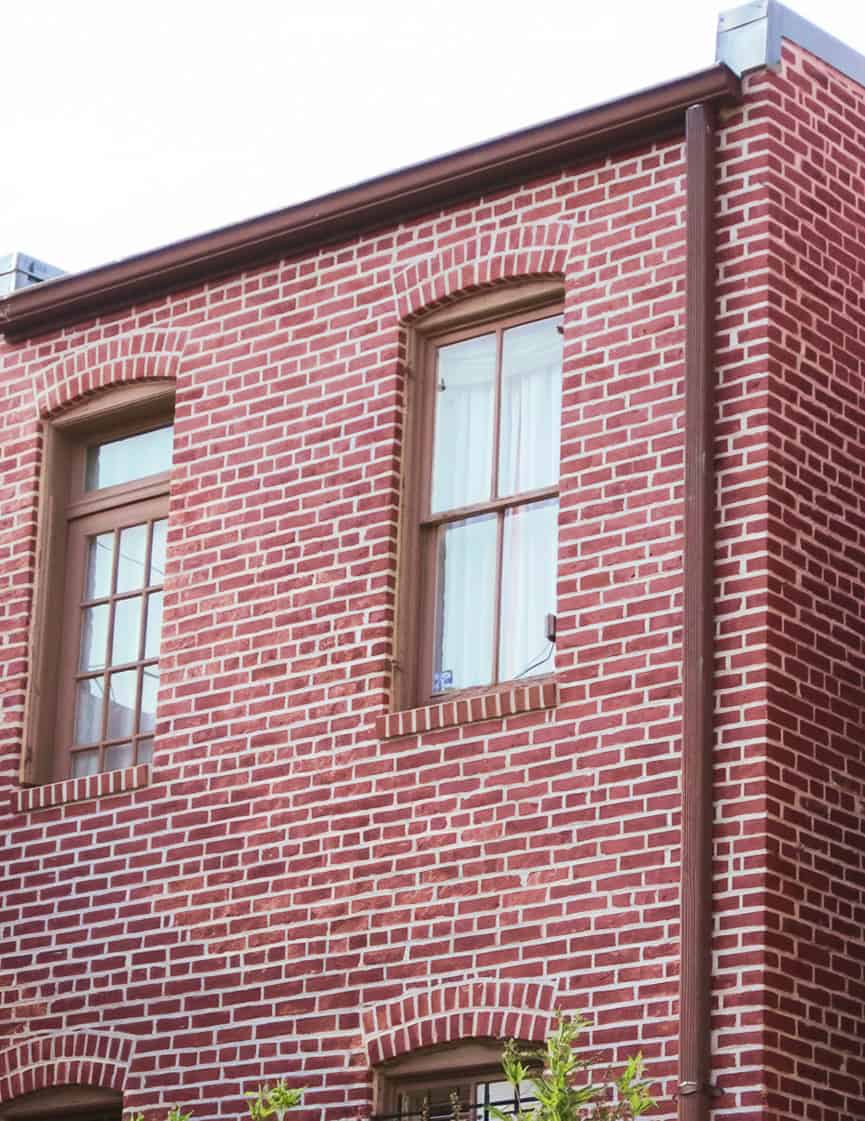
When individual bricks are broken, loose, badly spalled, or too deteriorated to preserve, selective replacement may be the appropriate solution. We pay close attention to brick color, size, texture, and placement so the repair supports the original character of the wall.
Where a brick can be preserved, the repair strategy may be more limited. Where a brick has failed, replacement should be approached with care so the new work does not look like an obvious patch.
02
Brick Crack Repair
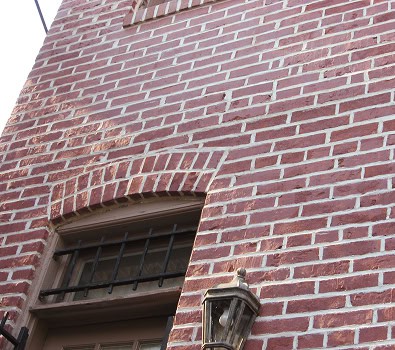
Cracks in brickwork should be evaluated before they are filled or patched. The location, pattern, and surrounding conditions matter. We look at cracks in the context of the wall, including nearby mortar joints, openings, prior repairs, and moisture staining.
A small crack may require a localized repair. Cracking near windows, doors, rooflines, chimneys, or wall transitions may point to a larger masonry condition that should be addressed more carefully.
03
Spalled Brick Repair & Selective Replacement
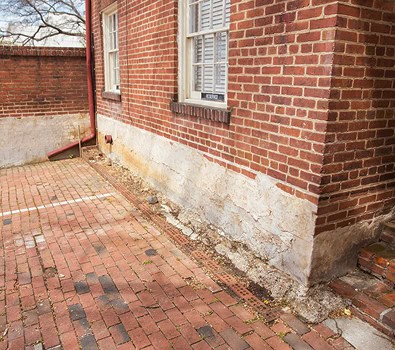
Spalling brick is a common concern on older buildings. The surface of the brick begins to flake, break away, or crumble. Because spalling is usually related to moisture, the repair should not focus only on the damaged face. The surrounding mortar, prior cement repairs, painted surfaces, and water exposure should also be evaluated.
When replacement is required, the goal is to preserve as much original material as possible while restoring the wall’s appearance and performance.
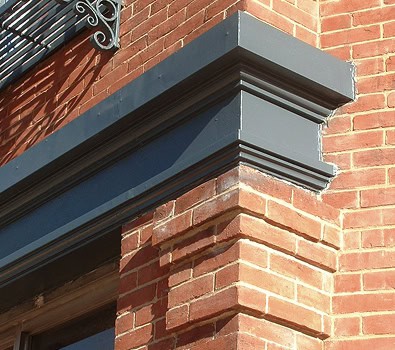
04
Mortar Joint Repair, Repointing & Tuckpointing
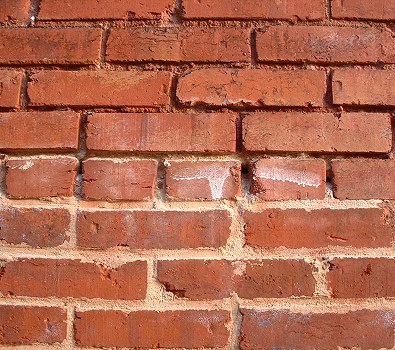
Homeowners often call this “crumbling mortar” or “gaps between bricks.” The technical terms are repointing or tuckpointing. Both generally refer to removing deteriorated mortar from the joints between bricks and replacing it with new mortar appropriate for the building.
On historic brick buildings, this is not simply a matter of filling gaps. The new mortar must be compatible with the original masonry so the wall can release moisture and the brick is not damaged by a repair that is too hard.
05
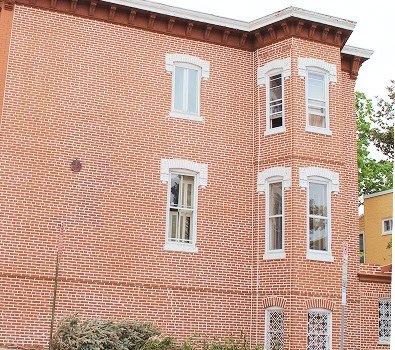
Brick Façade Restoration
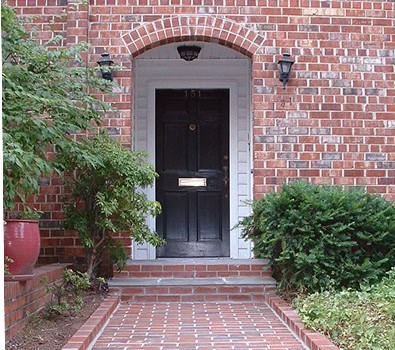
A brick façade may need more than one kind of repair. A proper scope may include removing incompatible patches, repairing failing mortar, replacing damaged bricks, correcting localized masonry deterioration, and cleaning the restored work when appropriate.
This is especially important for DC rowhouses, apartment buildings, and commercial structures where the front façade contributes heavily to the character of the building.
06
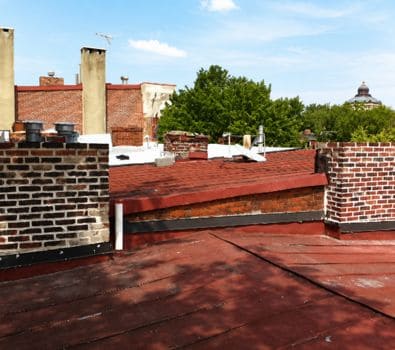
Chimney Brick Repair
Chimneys are among the most exposed areas of a brick building. Missing mortar, spalling brick, and loose chimney bricks should be evaluated before water intrusion or instability becomes more extensive.
Renaissance Development regularly performs chimney-related masonry restoration as part of its historic brick repair work. In many cases, chimney repair includes tuckpointing the chimney and selectively addressing damaged bricks.
07
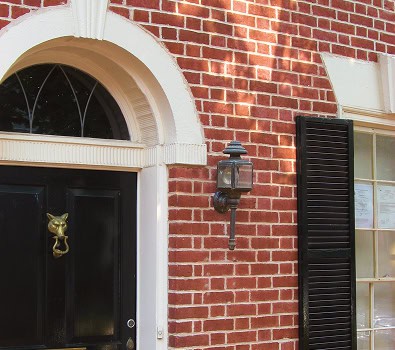
Brick Distress Around Windows, Doors, Sills & Rooflines
Brick damage often appears first around openings and edges because these areas receive concentrated water exposure and movement. Cracking near windows, doors, sills, lintels, cornices, and rooflines should be evaluated carefully.
We identify visible masonry deterioration, explain what may be contributing to the condition, and recommend the appropriate masonry repair scope. When a condition appears to involve elements beyond masonry repair alone, we address that carefully in the recommendation process.
08
Preservation-Friendly Cleaning Guidance
Cleaning can improve the appearance of restored masonry, but it should be approached cautiously on older brick. Aggressive cleaning methods can damage historic brick faces or change the appearance of the wall.
When cleaning is part of a restoration project, the method should be selected for the condition of the brick, the nature of the staining, and the age of the masonry.
Stop Brick Deterioration Before It Damages Your Historic Brick Façade
- Historic masonry specialists
- Right materials and methods
- Serving DC since 2004


Request a Free Estimate!
Tell us what you are seeing.
Describe the mortar or brick issue and our team will follow up about your property and next steps.
What Causes Brick Damage?
Brick damage often develops slowly. By the time a homeowner notices flaking brick, white staining, or loose mortar, the wall may have been absorbing moisture for some time.
01
Moisture Intrusion
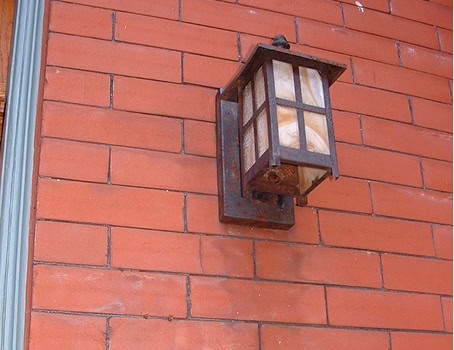
Water is one of the most common causes of brick and mortar deterioration. Open joints, damaged brick, roofline conditions, failed flashing, poor drainage, and prior repairs can all allow moisture to enter masonry walls.
02
Freeze-Thaw Cycles
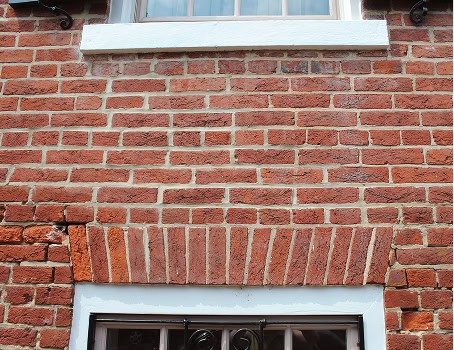
When water enters brick or mortar and then freezes, it expands. Repeated freezing and thawing can contribute to cracking, spalling, and mortar failure.
03
Trapped Moisture
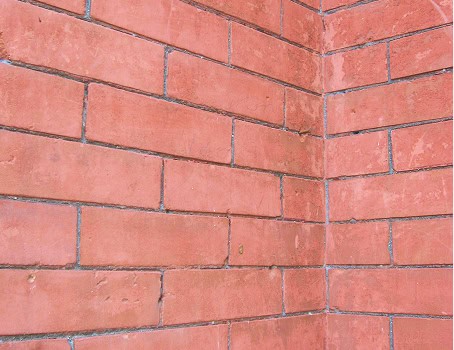
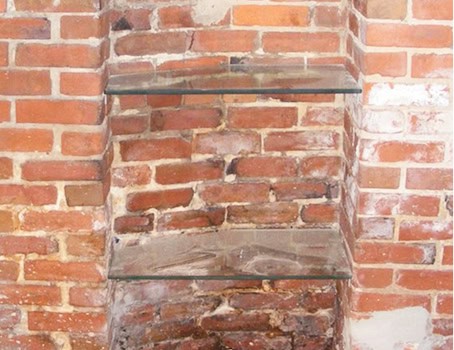
Paint, hard cement patches, non-breathable coatings, or incompatible repairs can trap moisture inside older masonry. When moisture cannot escape, brick damage may worsen.
04
Incompatible Cement Repairs
Hard cement may be appropriate in some modern construction, but it is often too dense for historic brick walls. On older buildings, hard repairs can stress softer brick and accelerate deterioration.
05
Settlement or Movement
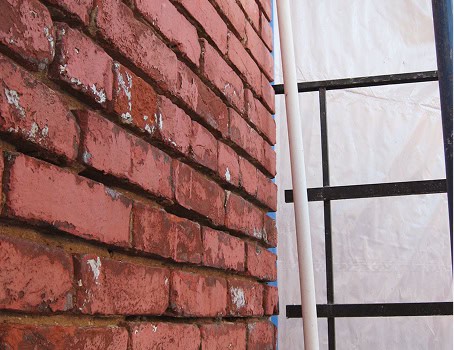
Some cracks are related to movement in the building or the surrounding masonry. The pattern and location of cracking should be reviewed before selecting a repair method.
06
Deferred Maintenance
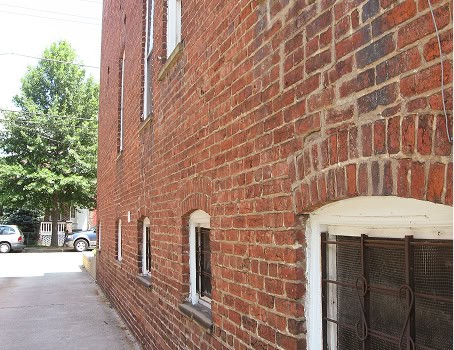
Small mortar gaps, damaged brick faces, and old patches often become more expensive to address when they are ignored. Timely evaluation helps determine whether a small repair is enough or whether the wall needs a broader restoration strategy.

Excellent Company!! Very Knowledgeable of Masonry and Restoration of Historical Preservation!
What to Expect From the Process
Renaissance Development’s process is designed to be clear, careful, and appropriate for older masonry buildings.
Inspection
We inspect the visible masonry conditions, including cracked brick, loose bricks, mortar deterioration, moisture staining, spalling, prior repairs, and areas around openings or rooflines.
Diagnosis
We look beyond the most obvious damage to understand what may be contributing to the problem. Brick repair is most effective when the likely cause is addressed, not just the visible surface.
Written Recommendations
After evaluation, we provide a written proposal outlining the recommended scope of work, areas to be addressed, and the restoration approach.
Preparation & Protection
Before work begins, surrounding areas are carefully protected. This may include landscaping, adjacent surfaces, neighboring property, and areas affected by access or staging. When permits are required, they are incorporated into the project process.
Brick Repair & Restoration Work
Damaged bricks are repaired or selectively replaced where needed. Failed mortar is removed and restored with compatible mortar. Prior incompatible repairs may be addressed as part of the scope.
Finish, Cleaning & Detail Review
Finished work is tooled and detailed with attention to the joint profile, appearance, and compatibility with the surrounding brick. Restored masonry is cleaned appropriately at the end of the project.
Final Walkthrough
At completion, we review the work with the client and make sure questions have been addressed.
Why Owners Choose Renaissance Development
Owners of historic brick buildings need more than a quick patch. They need a company that understands how older masonry behaves, respects the original fabric of the building, and completes the work with care.
Preservation-Minded Brick Repair
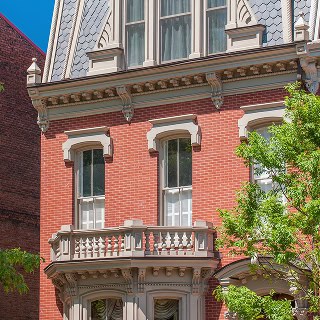
Renaissance Development approaches brick repair as part of historic masonry restoration, with the goal of protecting the wall while preserving the character of the original brickwork. Careful attention is given to brick selection, mortar color, mortar texture, joint profile, and the overall appearance of the finished work so repairs feel appropriate to the building rather than haphazard or incompatible.
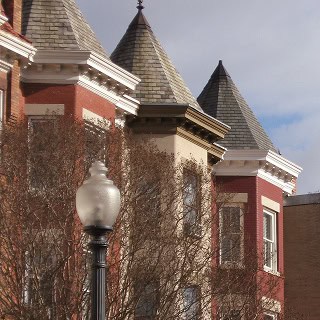
Historic Preservation Expertise
Founded by Dr. Christina K. Wilson, Renaissance Development brings uncommon depth in architectural history and preservation-minded restoration. That knowledge helps guide decisions involving older buildings, traditional materials, and appropriate restoration practices across a wide range of projects.
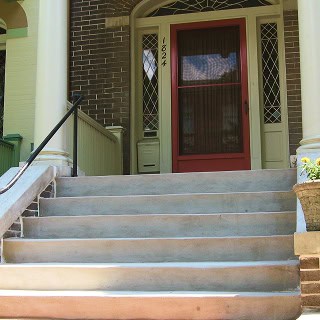
Residential & Commercial Restoration Capabilities
Renaissance Development works on historic rowhouses, single-family homes, apartment buildings, chimneys, façades, and commercial structures. The same preservation-minded principles guide every project regardless of size or scope.
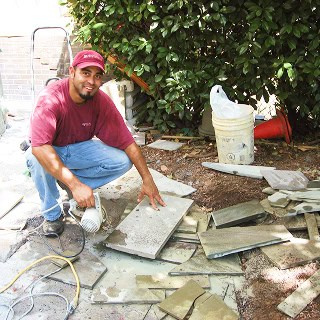
Clear Communication & Professional Work Practices
Clients should understand what is being recommended and why. Renaissance Development provides clear proposals, practical explanations, careful preparation, protection of adjacent areas, consistent communication, and thorough cleanup to ensure a professional experience from start to finish.

Serving Washington, DC and Old Town Alexandria
Renaissance Development serves homeowners and commercial clients throughout Washington, DC and Old Town Alexandria, with a strong focus on historic masonry and older brick buildings.
Interior masonry restoration is especially relevant in neighborhoods with historic rowhouses, apartment buildings, and masonry commercial structures, including:
The Renaissance Difference, In Our Clients’ Words
Common Questions About
Brick Repair & Restoration
Do I need brick repair or repointing?
It depends on what is failing. If the bricks themselves are cracked, spalling, loose, or broken, brick repair or selective replacement may be needed. If the mortar between the bricks is crumbling, recessed, or missing, repointing or tuckpointing may be part of the solution. Many historic masonry projects require both.
What is tuckpointing, and do I need it?
Tuckpointing, also called repointing, is the process of removing deteriorated mortar from the joints between bricks and replacing it with new mortar that is appropriate for the building. You may need it if you see crumbling mortar, gaps between bricks, loose bricks, staining, or moisture problems.
Can you match my existing brick?
Matching is always a priority. We look closely at the existing brick color, size, texture, and overall wall appearance. Exact matches are not always available, especially on older buildings, but the repair should be selected and executed so it blends as naturally as possible with the surrounding masonry.
Why is my brick flaking or spalling?
Spalling usually means moisture is involved. Water may be entering through failing mortar joints, trapped behind paint or hard patches, or held in the wall through poor drainage or prior incompatible repairs. Freeze-thaw cycles can make the damage worse.
What causes white powder on brick?
White powder is commonly called efflorescence. It appears when moisture moves through masonry and leaves mineral deposits on the surface. It is often a sign that water is entering or moving through the wall. Cleaning may remove the residue temporarily, but the moisture source should be evaluated.
Will the repairs look obvious?
Quality brick repair should not look like a careless patch. The finished appearance depends on brick matching, mortar color, mortar texture, joint profile, and the surrounding wall condition. Renaissance Development pays careful attention to these details so the repair supports the building’s character.
How long does brick repair take?
Timing depends on the size of the repair, access conditions, weather, the number of walls involved, and the extent of deterioration. A small localized repair may move more quickly, while larger façade or chimney restoration work may require more time. Your proposal will include a clearer project expectation based on the condition of the building.
What affects the cost of brick repair?
Cost is affected by the size of the area, the number of damaged bricks, the amount of mortar deterioration, access requirements, scaffold needs, prior cement repairs, chimney or roofline conditions, and whether the work is localized or part of a broader restoration scope.
Can you repair a small section without doing the whole wall?
Sometimes, yes. If damage is truly localized and the surrounding masonry is sound, a smaller repair may be appropriate. However, visible damage can also be a sign of broader mortar failure or moisture movement. We evaluate the wall before recommending the right scope.
How do I prevent brick damage from happening again?
Prevention begins with controlling moisture and using compatible materials. Keep gutters and drainage functioning properly, address open mortar joints before they expand, avoid hard cement patching on historic brick, and have masonry evaluated when staining, cracks, or loose bricks appear.
Do you repair brick chimneys?
Yes. Chimney deterioration is a common issue on older brick buildings. Missing mortar, loose brick, cracking, and spalling are strong signs that the chimney should be evaluated.
Do painted brick façades need brick repair?
Yes. Paint can hide failing mortar and damaged brick. In some cases, paint can also trap moisture in the wall. If paint is peeling, mortar is failing, or moisture appears indoors, the brick façade should be evaluated.
Restoration • Rejuvenation • Rebirth
Exterior Masonry & Historic Preservation Specialists
Renaissance Development is Washington, DC’s premiere company providing tuckpointing and brick façade restoration. In addition, we build patios, walkways, steps, and retaining walls, elements essential to urban gardens.
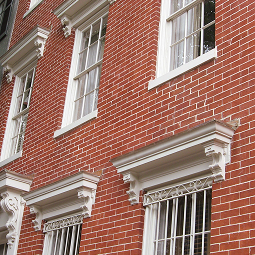
Tuckpointing
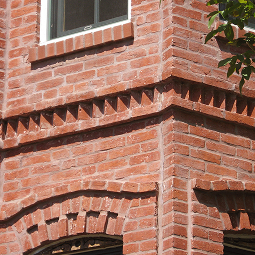
Masonry Restoration
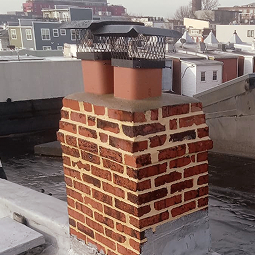
Chimney Repair
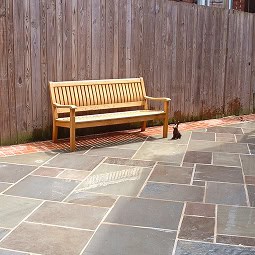
Patios
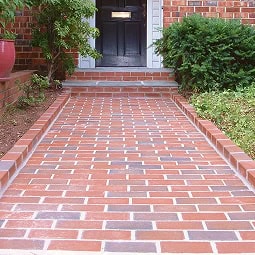
Walkways
Retaining Walls


