
Frequently Asked Questions
Helpful information for owners of historic brick buildings, older masonry structures, and exterior spaces throughout Washington, DC and Old Town Alexandria. Use this page to find topic-specific FAQs and answers from Renaissance Development’s masonry restoration team.
What is tuckpointing?
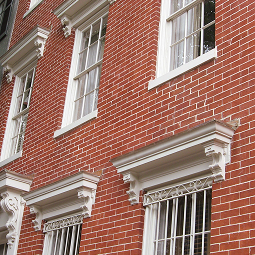
Tuckpointing—or repointing—describes the restoration and preservation of brick buildings by removing the deteriorated mortar between masonry joints and replacing it with historically appropriate mortar. If done correctly, tuckpointing will ensure the structural integrity, longevity, and value of historic masonry buildings.
How do I know if I need mortar repair?
Common signs of failure include cracked or missing mortar, chalky debris on brick faces, loose bricks, spalling bricks, and damp interior walls. If the mortar looks worn, recessed, or uneven, it is important to have it evaluated by a skilled masonry professional.
Can failing mortar cause a brick wall to leak?
Yes. Deteriorating mortar joints allow water to enter the wall. Homeowners searching a solution for this problem ultimately need masonry restoration at the source of water intrusion.
Do you provide free estimates?
Yes. All estimates are provided free of charge. In addition, we are fully equipped to answer any questions you have about your historic house, even if it is not directly related to masonry. Our sales associates are well versed in all aspects of older buildings and will gladly address any general questions you might have.
Do you provide references?
Yes. Renaissance Development has completed hundreds of projects during the past two decades. We have scores of satisfied clients who are more than happy to share their positive experience with us.
Why do older buildings need a special approach?
Historic houses were constructed differently from newer buildings. Brick structures built from the 1700s until the 1920s have load bearing walls consisting only of bricks and mortar. They generally contain no iron, steel, or any other reinforcing structural support. This means that their own weight provides structural integrity. Therefore, historic buildings require a specific approach when restoration work is required.
Do you repair chimneys?
Yes. Chimney repair—which generally requires tuckpointing the entire chimney—is a service we perform regularly.
Do painted brick facades need to be tuckpointed?
Yes. Although paint can mask deteriorating joints, mortar in painted brick walls is also subject to failure. In fact, paint covering faulty joints can make the situation worse, since the membrane created by latex paint can also trap moisture in the wall. We frequently tuckpoint painted facades to ensure their longevity and structural integrity.
How long do tuckpointing projects take to complete?
We calculate our estimates by the square footage of wall surface area. Most older buildings, depending on how many walls are included in the scope of work, can be completed in one to two weeks. Our sales associates can provide a more detailed timeline as part of a project’s evaluation.
Do I need to know exactly what service I need before contacting you?
No. Many clients contact Renaissance Development because they are seeing symptoms but do not know the cause. We can evaluate the masonry and help determine whether the appropriate next step is tuckpointing, brick repair, chimney restoration, façade restoration, or another scope of work.
What happens during the evaluation?
We look at visible masonry conditions such as failing mortar, cracks, loose brick, staining, chimney deterioration, moisture-related concerns, and prior repairs. We also consider access, scaffolding needs, adjacent areas, and whether permits may be required.
Will I receive a written proposal?
Yes. After evaluation, Renaissance Development provides a written proposal outlining the recommended scope of work and restoration approach.
Do you handle permits when they are needed?
When permits are required for a masonry restoration project, Renaissance Development incorporates that step into the process.
Will scaffolding be required?
It depends on the building and scope of work. Comprehensive masonry restoration often requires safe and stable access to the wall. When scaffolding is needed, it is planned as part of the project.
How long does a project take?
Project duration depends on the size of the building, the number of walls included, access conditions, weather, and the extent of deterioration. The timeline is discussed as part of the proposal and scheduling process.
How do you protect landscaping and adjacent surfaces?
Site preparation includes attention to landscaping, hardscape, windows, doors, neighboring structures, and adjacent areas that may be affected by the work. Protection needs are considered before restoration begins.
Can you work on occupied homes or buildings?
Yes. Many projects are completed on occupied homes and buildings. Communication, access planning, site organization, and cleanup are important parts of the process.
What happens at the end of the project?
The work area is cleaned, the restored masonry is reviewed, and the completed work is discussed with the client during the final stage of the project.
What is the difference between tuckpointing and repointing?
These terms are used interchangeably. Both refer to removing deteriorated mortar from brick joints and replacing it with new mortar so the wall can be properly restored.
Can failing mortar cause a brick wall to leak?
Yes. Open or deteriorated joints allow water to enter walls. When owners see damp interior walls, staining, or recurring moisture problems, the source is often failing masonry that needs to be addressed.
Why do older brick buildings require a special approach?
Historic buildings were constructed with load-bearing structural brick walls and soft, lime-based mortar. These walls behave differently from newer masonry systems, so repairs need to be compatible with the original materials rather than based on modern construction methods.
Do painted brick façades need tuckpointing?
Yes. Paint can hide failing joints, but it does not stop mortar deterioration. In some cases, it can also trap moisture in the wall. Painted brick still needs to be evaluated and repaired appropriately.
Do you repair chimneys?
Yes. Chimney deterioration is one of the most common reasons owners contact us. Missing mortar and loose bricks on chimneys are strong signs that restoration work is needed.
How long do tuckpointing projects usually take?
Project duration depends on the size of the building, the number of walls included, access conditions, and the extent of deterioration. Many projects on older buildings are completed in roughly one to two weeks, though larger or more complex scopes may take longer.
Do you provide free estimates?
Yes. We provide free estimates and are glad to answer questions about the condition of your building and the appropriate next step.
Schedule a Free Inspection
If your building is showing signs of failing mortar, loose bricks, or moisture intrusion, Renaissance Development can evaluate the masonry and recommend the appropriate scope of work.
We serve homeowners and commercial clients throughout Washington, DC and Old Town Alexandria, with a strong focus on historic brick buildings.
More questions? Schedule a free inspection now.
How do you match mortar color and texture?
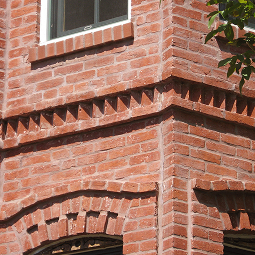
We evaluate the existing mortar and the overall wall condition to make sure that the replacement mortar is chosen for both structural compatibility and visual appearance. This includes looking closely at the mortar’s original composition, color, texture, and tooling.
Do you test or analyze mortar?
We assess existing mortar as part of the evaluation and use that information to guide the recommended restoration approach.
Is tuckpointing the same as repointing?
Yes. Both terms refer to removing deteriorated mortar from masonry joints and replacing it with new mortar appropriate for the building.
Can you restore masonry without replacing all the brick?
Yes. Many projects involve selective repair or replacement of bricks only where masonry units have completely failed. It is ideal to preserve as much of the original material as possible.
What causes spalling and crumbling in historic masonry?
Moisture is generally the major factor. Failing joints, incompatible prior repairs, trapped water, and freeze/thaw cycles can all contribute to spalling brick faces and broader wall deterioration.
What does an inspection include?
We look at visible wall conditions such as failing mortar, cracking, loose bricks, staining, moisture-related problems, and prior repairs. Then we recommend the appropriate scope of work to address all these issues holistically.
What is a typical project timeline?
Job duration depends on the size of the building, access conditions, and the extent of deterioration. Smaller scopes may move faster, while larger or more complex restoration projects take longer. Existing tuckpointing materials note that many older building projects can fall in the one-to-two-week range, depending on scope.
How do you protect landscaping and adjacent surfaces?
Protection is built into the process before restoration begins. We protect surrounding landscape, adjacent structures, and any other areas that might be impacted by the work.
Do you work on chimneys as part of historic masonry restoration?
Yes. Chimney deterioration is a common problem with historic buildings. Chimney restoration is one of the services Renaissance performs regularly.
Do I need brick repair or repointing?
It depends on what is failing. If the bricks themselves are cracked, spalling, loose, or broken, brick repair or selective replacement may be needed. If the mortar between the bricks is crumbling, recessed, or missing, repointing or tuckpointing may be part of the solution. Many historic masonry projects require both.
What is tuckpointing, and do I need it?
Tuckpointing, also called repointing, is the process of removing deteriorated mortar from the joints between bricks and replacing it with new mortar that is appropriate for the building. You may need it if you see crumbling mortar, gaps between bricks, loose bricks, staining, or moisture problems.
Can you match my existing brick?
Matching is always a priority. We look closely at the existing brick color, size, texture, and overall wall appearance. Exact matches are not always available, especially on older buildings, but the repair should be selected and executed so it blends as naturally as possible with the surrounding masonry.
Why is my brick flaking or spalling?
Spalling usually means moisture is involved. Water may be entering through failing mortar joints, trapped behind paint or hard patches, or held in the wall through poor drainage or prior incompatible repairs. Freeze-thaw cycles can make the damage worse.
What causes white powder on brick?
White powder is commonly called efflorescence. It appears when moisture moves through masonry and leaves mineral deposits on the surface. It is often a sign that water is entering or moving through the wall. Cleaning may remove the residue temporarily, but the moisture source should be evaluated.
Will the repairs look obvious?
Quality brick repair should not look like a careless patch. The finished appearance depends on brick matching, mortar color, mortar texture, joint profile, and the surrounding wall condition. Renaissance Development pays careful attention to these details so the repair supports the building’s character.
How long does brick repair take?
Timing depends on the size of the repair, access conditions, weather, the number of walls involved, and the extent of deterioration. A small localized repair may move more quickly, while larger façade or chimney restoration work may require more time. Your proposal will include a clearer project expectation based on the condition of the building.
What affects the cost of brick repair?
Cost is affected by the size of the area, the number of damaged bricks, the amount of mortar deterioration, access requirements, scaffold needs, prior cement repairs, chimney or roofline conditions, and whether the work is localized or part of a broader restoration scope.
Can you repair a small section without doing the whole wall?
Sometimes, yes. If damage is truly localized and the surrounding masonry is sound, a smaller repair may be appropriate. However, visible damage can also be a sign of broader mortar failure or moisture movement. We evaluate the wall before recommending the right scope.
How do I prevent brick damage from happening again?
Prevention begins with controlling moisture and using compatible materials. Keep gutters and drainage functioning properly, address open mortar joints before they expand, avoid hard cement patching on historic brick, and have masonry evaluated when staining, cracks, or loose bricks appear.
Do you repair brick chimneys?
Yes. Chimney deterioration is a common issue on older brick buildings. Missing mortar, loose brick, cracking, and spalling are strong signs that the chimney should be evaluated.
Do painted brick façades need brick repair?
Yes. Paint can hide failing mortar and damaged brick. In some cases, paint can also trap moisture in the wall. If paint is peeling, mortar is failing, or moisture appears indoors, the brick façade should be evaluated.
Is interior masonry restoration the same as interior tuckpointing?
Interior tuckpointing, or repointing, is often part of interior masonry restoration, but restoration can include more than replacing mortar. Depending on the condition, the work may also involve brick repair, selective replacement, cleaning, correction of incompatible prior repairs, and recommendations related to moisture symptoms.
Is interior repointing messy?
Masonry work can create dust, especially when deteriorated mortar is removed. The important question is how the project is planned and contained. Interior work should include protection for floors, trim, adjacent finishes, furnishings, access paths, and nearby rooms where practical.
How do you control dust during interior masonry work?
Dust control begins before the work starts. Depending on the room and scope, the work area may be contained, adjacent surfaces protected, and ventilation planned. Cleanup should be ongoing during the project and completed thoroughly before the final walkthrough.
Can you restore painted or sealed interior brick?
In many cases, painted or sealed brick can be evaluated and improved, but the right approach depends on the coating, the condition of the brick, and the condition of the mortar underneath. Some coatings trap moisture or hide deterioration, so the repair plan should be based on the wall’s actual condition rather than appearance alone.
Can you repair a crumbling exposed brick wall?
Yes, many exposed brick walls can be restored through careful repointing, selective brick repair, cleaning, and compatible finishing. If the wall is badly deteriorated or affected by conditions beyond the visible surface, we will explain the recommended scope and any limitations clearly.
How do you match historic brick and mortar?
Matching begins with close evaluation of the existing wall. Mortar color, texture, composition, joint profile, and tooling all affect the final appearance. Brick replacement, when needed, should consider size, color, texture, and how the new units relate to the original masonry.
What causes efflorescence on interior brick?
Efflorescence is usually a sign that moisture is moving through the wall and carrying salts to the surface. Cleaning can reduce the visible staining, but the underlying moisture movement should be evaluated so the same symptom does not simply return.
How do you handle moisture concerns?
We evaluate visible masonry conditions and look for likely contributors within the scope of masonry restoration, such as failing mortar, deteriorated brick, incompatible repairs, chimney conditions, or areas where water may be entering the wall. If the source appears to involve roofing, drainage, plumbing, exterior envelope issues, or another specialty, we will recommend that those conditions be addressed appropriately.
Do you work in occupied homes?
Yes. Many interior masonry projects take place in occupied homes. The project should be staged carefully, with clear communication about access, protection, dust containment, timing, and cleanup.
Do you work on fireplaces?
We evaluate and repair visible masonry around interior chimneys, fireplace surrounds, and related brickwork when appropriate. We do not present masonry restoration as a substitute for fireplace-system, flue, liner, gas, or combustion safety evaluation. Those items should be handled by qualified specialists.
Will the repair change the look of my exposed brick wall?
The goal is to improve the wall while respecting its historic character. Repointing, cleaning, and selective repair can make the wall look more finished and stable, but the best result should still feel appropriate to the age and material of the building.
How long does an interior masonry restoration project take?
Timing depends on the size of the wall, access, condition, containment needs, cleaning requirements, and whether brick replacement or coating removal is involved. Smaller interior scopes may move quickly, while larger or more delicate restoration projects require additional planning. The expected timeline should be discussed during the evaluation and proposal process.
How do I know whether a wall needs repair, rebuilding, or replacement?
Many interior masonry issues can be addressed through repointing, selective repair, and careful restoration. More extensive movement, loose masonry, or severe deterioration may require a broader scope. The first step is a professional evaluation so the recommendation is based on the actual wall condition.
Do you provide free estimates?
Yes. Renaissance Development provides free estimates and can answer questions about the condition of your masonry, the appropriate next step, and the restoration approach that best fits the building.
What is chimney tuckpointing?
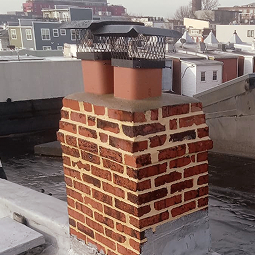
Chimney tuckpointing, or repointing, is the restoration of masonry joints by removing deteriorating mortar and replacing it with historically appropriate mortar. When completed properly, this effort helps restore structural integrity, prevents water intrusion, and extends the life of the chimney.
How do I know if my chimney needs repair?
Common signs include cracked or missing mortar, loose or spalling bricks, white staining, and moisture appearing inside the chimney. If the masonry looks worn, recessed, or uneven, it should be evaluated by a skilled masonry professional.
Can failing chimney mortar cause leaks?
Yes. Deteriorating mortar joints allow water to enter the chimney and surrounding masonry. This condition must be carefully addressed to prevent further moisture penetration problems.
Why do historic chimneys require a special approach?
Older chimneys were built with soft, coal-fired bricks assembled with traditional lime-based mortar. Using the wrong materials can damage the masonry rather than protect it. Historic chimneys require methods and materials appropriate to their original construction.
Does chimney repair involve the entire chimney?
Yes. While every condition must be evaluated individually, chimney repair generally requires comprehensive tuckpointing rather than intermittent patches. A comprehensive approach is almost always the best way to address the variety of issues inherent with aging brick chimneys.
Do you provide free estimates?
Yes. Estimates are provided free of charge. We are also happy to answer any general questions you might have about your historic home.
How long does chimney tuckpointing take?
The timeline depends on the size of the chimney, the extent of deterioration, access conditions, and whether damaged bricks must be replaced. After inspection, we will provide a specific project timeline as part of the proposal.
Do you provide references?
Yes. Renaissance Development has completed hundreds of projects during the past two decades, and we are happy to provide references.
Schedule Your Free Chimney Inspection
Do not wait for failing mortar to cause more extensive structural damage. If your chimney appears to show signs of failing mortar, loose bricks, or haphazard repairs, Renaissance Development can help.
How much does a patio cost in Washington, DC?
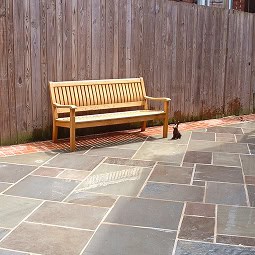
Patio cost depends on the size of the space, site access, demolition requirements, grading and drainage issues, and materials selection. A site visit is the best way to determine the appropriate scope which will in turn provide the project cost.
How long does patio installation take?
This depends on the size of the patio, weather conditions, access to the site, and how much preparation is required. Smaller, simpler patios will take approximately one week, while larger or more detailed projects will require more time to complete.
How do you help prevent pooling water?
Good drainage starts with proper site preparation, grading, and planting bed installation. Water management is always taken into account during the design process.
Do pavers shift or sink over time?
They can if the underlying base is inadequate or drainage problems are unresolved. Proper excavation and carefully installed edging will minimize this condition.
Do you repair old patios?
Our focus is building new patios. Existing paving is often too deteriorated or damaged to salvage. The only way to ensure a solid foundation and proper drainage is to construct a new patio that includes thorough site excavation.
Do I need a permit for a patio project?
Permit requirements for patios depend on their location. In Washington, DC most front yard patios require a permit while back yard patios do not.
Can a patio be coordinated with walkways or steps?
Yes. In many cases, tying the patio into adjacent walkways, steps, or retaining walls creates a more functional and better-finished result.
Request a Patio Estimate
If you are planning a new patio or replacing an older paving materials, Renaissance Development can review the site, present material options, and recommend a hardscape strategy perfectly suited to your yard.
Do you repair existing walkways, or do you only build new ones?
We do both. Some walkways can be improved through targeted repair and resetting, while others are better served by a more comprehensive reconstruction. The right recommendation depends on the condition of the surface and what is happening below it.
What materials do you use for walkway projects?
Depending on the property and project, Renaissance Development works with brick, stone, and concrete. Material selection should reflect both the practical needs of the site and the character of the house.
Can you match the look of an older home?
Yes. On historic properties, walkway work should feel visually appropriate to the architecture rather than disconnected from it. Material choice, layout, borders, and transitions all play a role in that outcome.
What causes a walkway to sink or become uneven?
Common causes include settlement, inadequate base preparation, root intrusion, erosion, drainage problems, and long-term movement. That is why a lasting repair often requires more than surface patching.
Do tree roots cause walkway damage?
They can. Root growth may lift paving, push units out of alignment, and create recurring instability. In those situations, the surrounding site conditions need to be considered as part of the repair strategy.
How do you address drainage and water ponding?
We look at slope, grading, and how water moves across the site. A successful walkway should help direct water appropriately rather than trap it or send it toward the building.
Can you repair only part of a walkway?
In some cases, yes. Localized repair may be appropriate when the problem is limited and the surrounding sections remain stable. Where the overall walkway is failing, a more complete rebuild may provide the better long-term result.
Do you also work on adjacent steps, stoops, or retaining edges?
Yes. Walkways often connect directly to other masonry features, and those transitions matter. When needed, the scope of work can address adjacent elements so the final result feels cohesive and performs properly.
Do walkway projects require permits?
Some do, depending on the nature of the work and the property. When permits are required, that is addressed during the planning process.
How long does a walkway project usually take?
Timing depends on the size of the walkway, the level of deterioration, access conditions, and whether the work involves repair, reconstruction, or entirely new construction. A more specific timeline can be provided after the site is evaluated.
Do you provide free estimates?
Yes. We provide free estimates and are glad to discuss what you are seeing, what may be causing it, and what the appropriate next step may be.
Can my existing steps be repaired, or do they need to be rebuilt?
It depends on the condition of the masonry and the cause of the damage. If the steps are generally stable and only certain joints or units have failed, repair or repointing may be appropriate. If the steps have settled, shifted, separated, or lost support below the surface, partial or full rebuilding may be the better long-term solution.
Why do brick or stone steps sink, shift, or pull away from the landing?
Common causes include water pooling, drainage-related washout, soil movement, freeze/thaw exposure, failed mortar, or base conditions that no longer support the steps properly. Older steps may also have been repaired several times without the underlying issue being addressed.
How do you address drainage and water problems around entry steps?
We look for signs of pooling water, open joints, washout, poor transitions, and water moving toward or through the masonry. When the needed work is within the masonry scope, we address accessible conditions as part of the repair. If the property requires a more specialized drainage or engineering solution, we identify that during the evaluation.
Can you match historic brick or stone?
We make every reasonable effort to select brick or stone that is compatible with the existing masonry in size, color, texture, and overall appearance. Exact matches are not always available, especially on older buildings, but careful material selection and joint finishing help the repair blend with the historic entry.
Do you work on stone steps as well as brick steps?
Yes. Renaissance Development works with exterior masonry materials including brick and stone. Stone step restoration may involve resetting, leveling, repointing, replacing failed units, or repairing adjacent masonry depending on the condition of the entry.
How long does step repair or rebuilding usually take?
The timeline depends on the size of the steps, the extent of damage, access conditions, material availability, weather, and whether the scope includes adjacent walkways, landings, stoops, or drainage-related work. After the site evaluation, we can provide a more specific timeline in the proposal.
Will I be able to use my front entry during the project?
In some cases, access can be maintained for portions of the work. In other cases, the entry may need to be limited while masonry is being removed, reset, rebuilt, or cured. We discuss access before work begins so you know what to expect and can plan accordingly.
What affects the cost of step restoration?
Cost depends on the materials involved, the extent of deterioration, whether the steps need repair or rebuilding, access conditions, the condition of the base, drainage-related issues, matching requirements, railings or adjacent masonry, and the amount of work needed at the landing or walkway connection.
Can you work around existing railings or handrails?
Often, railings and handrails can be protected or worked around, but some projects require temporary removal or coordination depending on how the railing is attached and how much masonry must be rebuilt. We evaluate this during the site visit and include the relevant details in the recommended scope.
Can you coordinate step repairs with walkway or entry path improvements?
Yes. Steps, walkways, landings, and entry paths often work together. If the connection between these areas is part of the problem, we can recommend a scope that addresses the entry sequence as a whole.
How can I maintain restored masonry steps?
Keep the steps clean, avoid letting water pool, watch for new cracks or loose joints, and address small problems before they spread. It is also wise to avoid harsh treatments or incompatible patching materials that can damage older brick or stone.
Do you provide free estimates?
Yes. Renaissance Development provides free estimates. Tell us what you are seeing — settling, cracking, loose brick or stone, crumbling joints, water pooling, or separation from the landing — and we can recommend the appropriate next step.
Can a retaining wall be repaired, or does it need to be rebuilt?
That depends on the extent of movement, cracking, settlement, material deterioration, and drainage-related damage. Some walls can be stabilized and repaired effectively, while others are too far gone for a durable repair and are better rebuilt. The right answer comes from evaluating the wall as a system rather than focusing on one visible defect.
What usually causes retaining walls to fail?
Common causes include trapped water behind the wall, poor drainage, soil movement, settlement, erosion, deteriorated mortar joints, failed prior repairs, and base conditions that no longer support the wall properly. In many cases, more than one issue is involved.
Why does drainage matter so much behind a retaining wall?
Because trapped water adds pressure. When water has nowhere to go, it pushes against the back of the wall and can contribute to cracking, leaning, staining, washout, and eventual failure. A good retaining wall strategy accounts for both the masonry and the way water moves through the site.
Do retaining walls need weep holes or drainage provisions?
Many do, but the appropriate solution depends on the wall type, the amount of retained soil, the grading, and the overall site conditions. In some situations, drainage stone, weeps, outlets, or piping may all be part of a better-performing wall system.
Can you match brick, stone, mortar, and finish details on a historic property?
That is an important part of the work. On older properties, the restored wall should feel consistent with the building and surrounding masonry. Material selection, jointing, caps, and finish details are all considered carefully so the completed work looks appropriate.
Can retaining wall work include connected steps, walkways, stoops, or patios?
Yes. Many retaining wall problems affect adjacent masonry elements, and many retaining walls are built directly into those transitions. When that is the case, it is often best to evaluate the connected features together so the finished work performs properly and looks cohesive.
What affects the cost of retaining wall repair or rebuilding?
Cost is influenced by the wall’s size and height, the extent of failure, access conditions, the type of masonry involved, how much demolition is required, drainage or grading corrections, and whether adjacent steps, walkways, or other site elements are part of the scope.
How long does a retaining wall project usually take?
Timing depends on the wall size, degree of deterioration, access, weather, material needs, and the complexity of the site. Smaller repairs may move quickly, while larger rebuilds or walls with drainage and grading issues may require more time. A project-specific timeline is part of the evaluation and proposal process.
Will permits or historic district requirements ever apply?
They may, depending on the property location, wall visibility, project scope, and the nature of the work. Permit needs and any likely approval considerations should be discussed early so the project can be planned appropriately.
Is a leaning or bulging retaining wall a safety concern?
It can be. Visible movement may indicate that the wall is no longer performing as intended. If the wall is near steps, walkways, play areas, patios, or neighboring property, it is wise to have it evaluated before the condition worsens.
How can I help my retaining wall last longer after repair or rebuilding?
The best long-term protection usually involves keeping drainage paths clear, watching for new movement or cracking, addressing small masonry problems early, and preventing conditions that cause water to collect behind the wall. Periodic evaluation is wise, especially on older properties.
Do you provide free estimates?
Yes. If your retaining wall is leaning, cracking, separating, settling, or showing signs of drainage-related damage, Renaissance Development can evaluate the masonry and recommend the appropriate scope of work. We serve Washington, DC and Old Town Alexandria with a careful, preservation-minded approach to exterior masonry and historic properties.
Further Resources
Need Help Choosing the Right Resource?
Masonry deterioration can be difficult to interpret from the ground. If your building is showing signs of failing mortar, loose bricks, chimney deterioration, staining, or moisture intrusion, Renaissance Development can evaluate the condition and recommend the appropriate next step.
Tuckpointing
Mortar Restoration
Chimney Repair
Patios
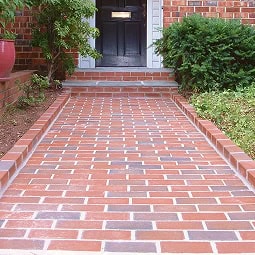
Walkways
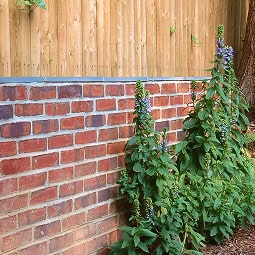
Retaining Walls


